Giga-church Second Baptist Houston Court Battle Update: New April 29, 2026 Jury Trial Date Set

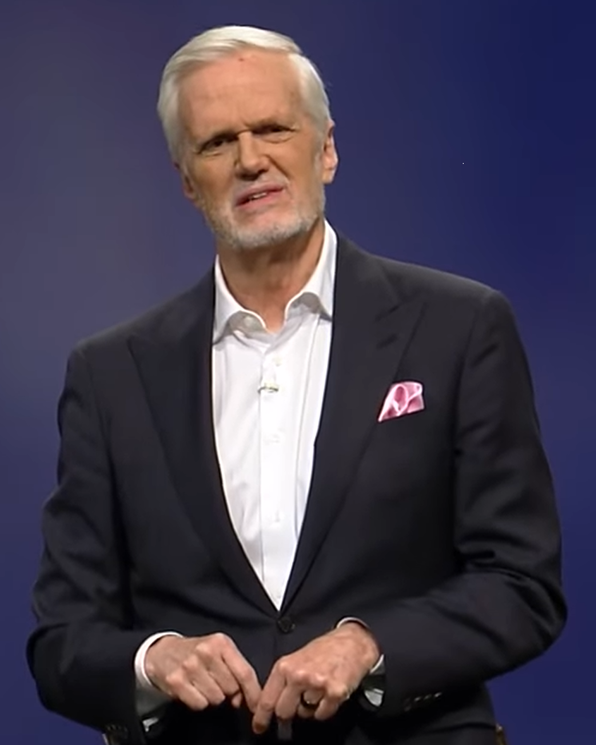
Pastor Ben Young preaching, May 19, 2025

Last spring, in a dispute over new church bylaws, a large group of concerned members of the 90,000-plus member Second Baptist Church (SBC) of Houston formed the non-profit Jeremiah Counsel Corporation (JCC) and filed a lawsuit against the church’s former senior pastor Homer Edwin Young, new senior pastor Ben Young, Lee Maxcy, Dennis Brewer Jr., and the Second Baptist Church Corporation. 

This action was, they said, a last resort to reverse what they considered a hostile church takeover by what they collectively refer to as the “Young Group” – a new board composed mostly of immediate Young family relatives, staff and their lawyer, Dennis Brewer (more about Brewer below).

After contacting, or attempting to contact, former senior pastor Homer Edwin Young and new senior pastor Ben Young several times to reverse the damage, JCC began litigation, asking for three things:

  • Restore member voting rights
  • Put in place an independent, member-elected Board of Trustees
  • Guarantee members access to church bylaws and audited financials

The Problem

Church leadership scheduled a special business meeting in May 2023 to vote on new church bylaws. Church members were not allowed to read the proposed bylaws before the vote.  Instead, the church leaders falsely told the congregation the sole purpose of the new bylaws were to protect SBC from a “woke” agenda.

They didn’t realize the new bylaws concentrated all governing authority in the hands of the Young Group and consolidated power in the hands of one individual—initially Homer Edwin Young and then one year later to his son and his appointee, senior pastor Ben Young. 

The new document gives Ben the power to hand-pick its board members which they are calling a Ministry Leadership Team (MLT). The new document eliminates checks and balances previously held by the former church’s bylaws and upheld by its trustees.  It placed roughly a billion dollars of assets under the control of the Young Group.

A complete summary of the reasons for the lawsuit can be found on the JCC website.

According to JCC, “This is not about theology or personalities. It is about legal, ethical, and financial accountability… SBC (Second Baptist Church) was built by faithful members over generations. It belongs to the body of believers, not to one man or one family… If we stay silent, SBC will become a permanently private, family-controlled institution.”

The Defendants Are Not Victims

Defendants named in the 123-page petition are represented mainly by Mike Cash at Liskow & Lewis.

Dennis Brewer Jr. has his own lawyer.  His Response to Plaintiff’s Motion… adopts the stance of victimhood when he mentions that Jeremiah Counsel Corporation’s brief reads more like a “hit job”.  Poor Mr. Brewer.  Perhaps he and the other defendants could claim victimhood if they weren’t the perpetrators of the alleged church takeover.

We say “alleged” but the allegations are strong, and compelling, and they are attested to by the many witnesses this author has interviewed.  Our initial article, “A Story of Power, Deceit, and Betrayal…”, details how the situation evolved and how the defendants were given time and opportunities to reverse the current situation.

Defendant Dennis Brewer Jr.’s and Fellowship Church’s lengthy history and why it matters;

Dennis Brewer Jr.’s relationship with Ed Young’s Fellowship Church of Grapevine, Texas, isn’t mentioned in his brief to the court, but he’s had at least a 25-year history there serving in various capacities, including its legal counsel, a board member, and its CFO. 

Fellowship Church’s Ed Young is Homer Edwin Young’s eldest son, Ben Young’s older brother, and Dennis Brewer Jr.’s sometime fishing buddy.

Fellowship church began as Las Colinas Baptist Church, then became the Fellowship of Las Colinas in 1991, and Las Colinas Fellowship in 1998 (amended articles here) controlled by a board of trustees elected by a vote held by a quorum of at least one-tenth of the voting members of the congregation.  It became Fellowship Church in 2001 when the organization once again amended its articles of incorporation.

At that point all power was removed from the church’s board of trustees and plenary power (unqualified, absolute power) placed in the hands of a newly formed Ministry Leadership Team comprised of Ed Young, Dennis Brewer Jr., and two other men (Amended and Restated Articles of Incorporation Article 8, Board of Directors). These articles claim they were approved at a “a properly noticed meeting”, but if indeed Fellowship Church’s 2001 business meeting was properly noticed, did church members know they were permanently eliminating their right to vote?

Brewer Jr.’s history of eliminating church members right-to-vote with Fellowship Church

Fellowship Church has a history of church takeovers that left several failed churches in its wake (read here: Ed Young’s Toxic Church Business Practices and Mergers Infect Second Baptist Houston and Other Churches)

  • Fellowship Church merged with First Baptist Church of South Miami in 2006. The merger document reads, “Fellowship Church has no members entitled to vote on this plan of merger. The plan of merger was adopted by a unanimous written consent resolution of the board of directors on July 19, 2006 by all directors entitled to vote.”
  • Article 9 of Fellowship Church Florida’s articles of incorporation, executed by Laura Lang of Brewer’s law firm on September 24, 2015, reads “plenary (complete) power to manage and govern the affairs of the corporation is vested in the board of directors of the corporation.”
  • Fellowship Church merged with Primera Iglesia Bautista Hispana, Inc on July 29, 2012. Article 6 of the merger reads, “There are no members of the surviving corporation, Fellowship Church, entitled to vote on the articles and plan of merger. The plan of merger was unanimously adopted by the board of directors effective as of July 29 2012.”
  • In 2018, Fellowship Church South Biscayne, Inc. merged with Fellowship Church. Article 6 of the merger reads, “There are no members of the surviving corporation, Fellowship Church, entitled to vote on the articles and plan of merger. The plan of merger was unanimously adopted by the board of directors effective on March 20, 2018.” Both Ed Young and Dennis Brewer Jr. signed exhibit A of the merger document.
  • Fellowship Church Norman in Norman, Oklahoma, formerly known as Journey Church, was closed not long after Fellowship Church in Grapevine took control. It’s a good bet that all voting rights of church members were eliminated there as well.

A Long relationship with the “prosperity gospel”

The church also has a long relationship with the “prosperity gospel” and pastor Ed Young’s well-documented lavish lifestyle, having lived in successive multi-million-dollar mansions, utilized private jets, etc.

Social media photos placed Ed and his wife Lisa Young at a very large, expensive mansion in the Florida Keys, a house valued by real-estate site Redfin at $8,876,000. 

The trustee owner of the mansion is LaurelB, LLC, a Delaware limited liability company that isn’t current in Delaware and may no longer exist.  The authorized agent who signed the mortgage document is Dennis Brewer, Jr.  Ed Young’s dad, Homer Edwin Young was born and raised in Laurel, Mississippi. Coincidence? Perhaps.

Trinity Foundation believes that Dennis Brewer, Jr. operated as a “straw buyer” to purchase the property on the Young’s behalf.  The new Florida Keys beach house purchased followed the sale of the Young’s prior Florida Keys beach house.

The Youngs have received massive housing allowances from Fellowship Church, affording them the opportunity to acquire extravagant real estate.  Currently, the Youngs own a mansion in an exclusive gated community in Westlake, Texas, as well.  The gated neighborhood is home to the privately owned 18-hole Vaquero Golf Course and the community offers “unparalleled opulence”. 

Brewers Brief

Brewer’s brief claims church autonomy as if he and the Young Group are above the law. 

His brief mentions that self-perpetuating boards are common in the rest of the non-profit world, as if Mr. Brewer assumes churches are supposed to be run like many other secular non-profit organizations. However, it’s a practice that is frowned upon in the secular world, when the board is comprised of mostly family members. 

Best Governance Practices: Why This Case Matters

Dennis Brewer’s Jr.’s brief states, “The Ministry Leadership Team is a self-perpetuating board, a common method of nonprofit governance.”

Best governance practices decry self-perpetuating boards of directors that are comprised of non-independent members. Self-perpetuating boards made up of mostly family members is a practice called nepotism and it facilitates self-dealing, especially in churches and church affiliated organizations since they are not required to file any public financial information.

Moreover, self-perpetuating boards are historically not common among churches, and even less among Baptist Churches.  However, it’s a much more recent trend—especially among independent large churches where pastors seek to exercise control with little or no accountability.

David Morrill of the independent religion news website Protestia wrote “Warlords of the Ghetto…” and he zeroed in on this same subject of church governance last week:

“In its biblical and historic form, plural eldership exists within a framework of meaningful congregational authority. Elders lead; congregations retain the power of recognition, correction, and removal. As has been noted many times recently, elder plurality was never intended to create self-generating spiritual authorities insulated from the people they serve. But when elder rule is severed from real congregational oversight, it becomes something else entirely.” (our emphasis)

More challenges in Brewer’s brief to the court

His brief states, “the Court should first resolve issues of jurisdiction, standing, and church autonomy before addressing the substantive legal matters raised by this motion.”  It’s our understanding that the defendant has already asked and received a change of venue during the early months of the lawsuit from the Texas district court to the Texas business court. 

With respect to church autonomy, JCC has indicated that the lawsuit is not about theology, but rather is about legal, ethical, and financial accountability, as stated previously; i.e. purely a business matter.

Brewer’s brief says JCC’s lawsuit “grossly overreads the import of the 1928 Articles and 1978 Amendments as they pertain to church members’ voting privileges”. 

Trinity Foundation reviewed the original articles from 1928 and the amendments, and they read as follows: “This corporation shall have 6 trustees, who may be either elected annually or in classes with terms of office not exceeding 3 years as this corporation may from time to time deem desirable.” The 1978 amendments read, “Pursuant to the provisions of article 2.20 of the Texas nonprofit corporation act, the church trustees have been expressly powered by second Baptist Church to act as its officers.” (January 19, 1978).

Brewer argues that this terminology is insufficient, that it’s dated, and that it expired long ago. However, he does not say exactly when it expired.

The 2005 amended bylaws clearly define the membership of the church, as congregants who have expressed a desire to join the church by four different means common to other Baptist churches and clearly gives them the right to vote at church business meetings, “Every member of the church is entitled to vote at all church business conferences, provided the member is present.”

Brewer’s brief alleges that JCC’s lack of additional citations other than Texas Business Code 22 is insufficient. 

He’s partly correct in that there are not many precedents available to cite.  The case is unusual because in Trinity Foundation’s decades of experience, church takeovers are generally not contested.  It’s a costly proposition to file a church takeover case in civil court. In these situations, members generally grieve their lost church family and friends, as well as their spiritual and monetary contributions—and then they move on.

The church world in America needs more case law precedent as church takeovers are becoming more common. 

Brewer emphasizes that the church gave sufficient notice, though that has been challenged by the JCC members. His brief ignores the claims that congregants were led to believe that the meeting was called to protect the church from a “woke” agenda and that meeting participants were not given copies of the bylaws to review in advance of the meeting or during the meeting.

Brewer’s brief states, “In other words, the over 300 members present at the May 31, 2023 meeting expressly gave up the right to vote on church business by 315-2 majority.”  In fact, they could not have expressly given up the right to vote because they were not told that these bylaws eliminated the right to vote.

How do you expressly give up a right when you are not told or given a copy of the document you are asked to vote on and you are voting based on a presentation which did not include this important fact?! Informed consent is critical when voting on matters important to congregations.

Trinity Foundation will be watching this case closely.
An Open Letter to U.S. Attorney Sarah Resnick Cohen: Whistleblower Organization Recommends Additional Fraud Charges Be Filed Against David E. Taylor

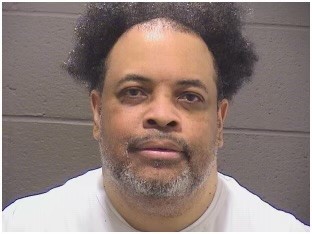
David E. Taylor mugshot

Dear United States Attorney of Record Sarah Resnick Cohen and U.S. Attorneys Jerome F. Gorgon Jr., John K. Neal, Christina Randall-James, and Ariana Dydell,

Trinity Foundation has investigated religious fraud for over 35 years, and we have observed many religious leaders using deception to obtain donations from their followers.

In addition to current charges, Trinity Foundation investigators “Pete” John P. Evans and Barry A. Bowen recommend suspect David E. Taylor be charged with Criminal Fraud.

We believe the facts and circumstances relating to Mr. Taylor and his ministries provide an ideal opportunity to firmly establish case-law that would benefit United States citizens who donate regularly to questionable religious non-profit organizations.

In August 2019, we submitted a report to the Criminal Investigation Division of the IRS in Dallas Texas recommending Mr. David E. Taylor be charged with criminal fraud and that the tax-exemption status of his three non-profit organizations be revoked.

The United Stated District Court Eastern District of Michigan Southern Division has jurisdiction. Taylor’s fraudulent money-raising tactics cross state lines and go all over the US via his internet website, mass emails, the US postal service, and television.  Moreover, he has operations in four states—Florida, Michigan, Missouri and Texas.

Continue reading “An Open Letter to U.S. Attorney Sarah Resnick Cohen: Whistleblower Organization Recommends Additional Fraud Charges Be Filed Against David E. Taylor”

What Can Go Wrong Investing in a Pastor’s Family Enterprise? A Stockstill Business Affair

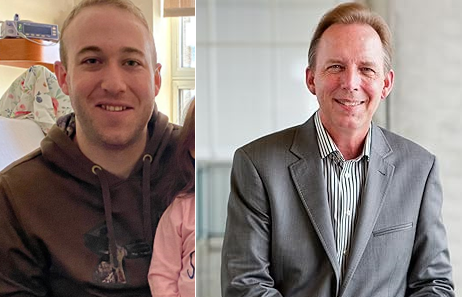
Jason Stockstill on left, Larry Stockstill on right

Pastors, televangelists, and other religious leaders are held in a position of trust.  In general, they are more trusted by the churchgoing, Bible-believing public because they are assumed to be living clean, godly lives.  They are assumed to have integrity.

When one of these leaders recommends an investment to a member or members of their congregation who have money to invest, it should be a no-brainer to fund, finance or otherwise support whatever “great investment opportunity” they recommend.

But not so fast. We’ve been told by financial regulators that there is more money stolen in the name of God than any other way!  Check out this pastor’s fraudulent crypto-currency scheme for example.

“Godly” leaders themselves are also vulnerable to investment scams. It’s common for religious leaders to be recruited by unscrupulous con-artists by appealing to the leader’s underlying human greed. Moreover, pastors are frequently bad at discerning people’s character.

Televangelist Benny Hinn was never charged or convicted of any crime, but in the early 2000s, Hinn had a hand in helping gain investors for two different ‘Ponzi Scheme’ criminals, Gregory Setser and Joseph Medawar, who stole millions from unsuspecting investors and were convicted.  Our article How Criminals Target Wealthy Believers gives more details. This type of situation is known as “religious affinity fraud”.

The following is an ongoing story about religious affinity investments that have gone awry.

Larry Stockstill, Jason Stockstill, & Tangible Trading Company—an Investor’s Nightmare

 Ken Addington invested $175,000

 Jason Stockstill approached Ken Addington in the fall of 2021 to invest in his export company and to join the board of directors.  He called it Tangible Trading Co. and incorporated it in Delaware.

When Addington found out Jason’s father, retired Louisiana megachurch Pastor Larry Stockstill was the Chairman of the Board of ‘Tangible’ he “felt it was an honor for me to serve with these men.  I felt that Larry was a pastor’s pastor, a man of integrity and held him in the highest regard.”

Continue reading “What Can Go Wrong Investing in a Pastor’s Family Enterprise? A Stockstill Business Affair”

Televangelist David Taylor FINALLY arrested

David E Taylor, a self-proclaimed prophet and faith healer on the WORD Network has FINALLY been arrested for an elaborate human trafficking and money laundering scheme.  Why say “FINALLY”?  Taylor’s abusive and deceptive tactics can be traced back at least two decades.

Beginning seven years ago Trinity Foundation sent reports about David E Taylor to the IRS Exempt Organization Division. Our first report was delivered in 2018 when we recommended Taylor’s organizations lose their tax exempt status and again in 2019 in a report titled “Recommendation to File Criminal Charges Against David E. Taylor and Revoke the Tax-Exempt Status of 3 Organizations:  Joshua Media Ministries Inc. (JMMI), Kingdom of God Global Church, & Kingdom Family Church)”.

A ten-count indictment was filed July 23rd, 2025 in a Michigan U.S. District Court charging Taylor and his Executive Director Michelle Brannon, Taylor’s enforcer, with “Conspiracy to Commit Forced Labor” and “Money Laundering Conspiracy”.

This was a coordinated investigation by the FBI and the Criminal Investigative Division of the IRS which included raids in Detroit, Houston, and Tampa as well as coordinated efforts in St. Louis and Charlotte.  SWAT teams were dispatched to the church’s 28,000 square foot parsonage (includes guest house) in Tampa and to Taylor’s “JMMI” headquarters in Houston which formerly was a 67-room hotel.

Fox news Houston’s report mentioned some people were taken out in handcuffs and others simply walked out.  Detroit’s local TV news 4 report mentioned the disturbing allegations in the indictment.

The deeply disturbing allegations in the indictment include severe punishment exacted by Taylor and Brannon when unpaid call center workers did not meet their quota of donation money raised, such as withholding meals, forced fasting, forced diets of peanut butter and jelly, forced labor until 4 am, mandated sleeping in a garage, begging for forgiveness on one’s knees, and physical abuse, etc.

Eight victims were listed as witnesses in the indictment, with names redacted and Trinity Foundation believes more will come forward following these arrests.

The U.S. Department of Justice summarized the indictment in a press release earlier this morning:  “Two Self-Professed Religious Leaders Who Used Physical and Psychological Abuse to Coerce Victims to Solicit Tens of Millions in Donations Federally Charged and Arrested”

Our 2019 report stated, “Taylor’s money-raising tactics cross state lines and go all over the US via his internet website, mass emails, the US postal service, and television.”

Trinity Foundation is preparing to launch a document library later this week and we’re calling it the “Vault”, featuring our investigative reports, church and ministry governance documents, financial reports, fraudulent fund-raising letters / mail marketing, and much more.  We want people to see with their own eyes the methods corrupt religious leaders employ.

Please, Africans (and Others), It’s About That Snake, Benny Hinn and his Many Broken Promises…

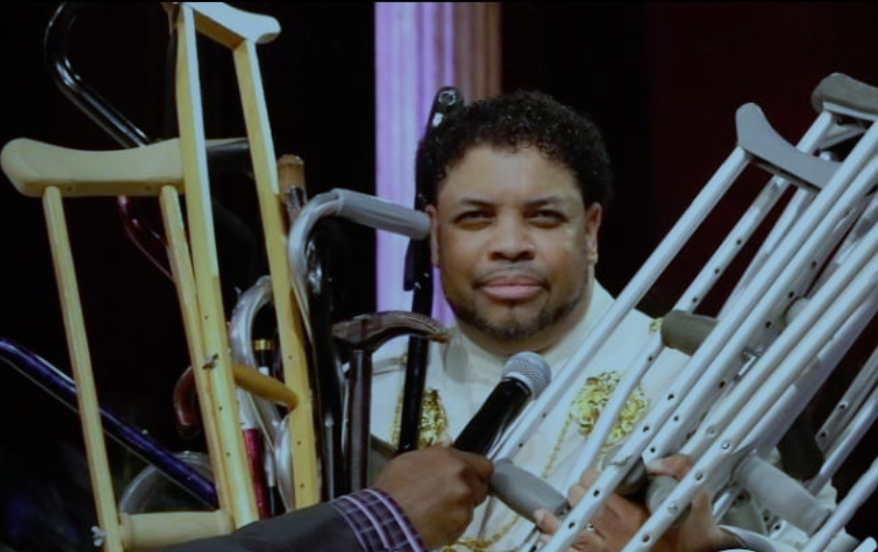
Snake image from Pixabay, screen shot of Benny Hinn on Daystar, Joni Table Talk

Teflon televangelist Benny Hinn is back in the international crusades numbers game again.

From July 30, 2025: “Beloved Partner… Right now, our ministry is making preparations for a massive tent revival in England, where we expect tens of thousands (really??) to gather for a divine encounter with Jesus. Simultaneously, I’m about to depart for Ghana, where I will minister to over 25,000 pastors (is that true??), equipping them to carry the fire of the Gospel to their nations.”

AND from June 30, 2025, “My Precious Partner (if he only knew)… What we have just witnessed in Uganda is nothing short of a divine visitation—a historic moment in the Kingdom of God. Over the course of three unforgettable nights, more than 1.5 million people attended (who was doing the counting??), and one single service drew a staggering crowd of 700,000 hungry souls (you don’t say… ??) crying out to the Lord. The atmosphere was saturated with worship, miracles, and the unmistakable presence of the Holy Spirit…  Over 15 million people watched (if truth be told, how many??) the crusade via television and social media platforms.”

Background and Broken Promises

Before 1991 Benny was already performing healing “crusades” to sold-out crowds in auditoriums and other churches, and soon thereafter, not just in America but in other countries around the world.

Inside Edition did an exposé about Hinn in 1993.  Hinn promised Trinity Foundation president Ole Anthony and Inside Edition cameras he would have medical verification of the healings before televising testimonials (he didn’t) and he said he would stop driving a Mercedes Benz and start driving a Honda (he didn’t).

He told his congregation “I think I’m going to stop preaching healing and start preaching Jesus.” (he didn’t) A month later he also said, “Preachers who live in big houses and drive big cars have to reexamine their calling.  Some of God’s saints lived in caves!”  (he never stopped living in mansions, either).

False Prophecies: Hinn made several unfulfilled prophecies during the 1990s, including predictions about the timing of Fidel Castro’s death and the destruction of the homosexual community in America.

After working undercover in Hinn’s ministry and conducting nighttime dumpster diving at his brother Chris Hinn’s travel agency, Trinity Foundation and Pete Evans assisted CNN with an exposé about Hinn in 1996-1997.

In April 2001, HBO aired a documentary entitled A Question of Miracles that focused on Hinn and another televangelist. The film’s director, Antony Thomas, said they did not find any cases where people were actually healed by Hinn (Wikipedia).

In November 2004, a a Canadian Broadcasting Corporation (CBC) television show The Fifth Estate did a special titled “Do You Believe in Miracles” on the apparent transgressions committed by Hinn’s ministry.  In particular, the investigation highlighted the fact that the most desperate miracle seekers who attend a Hinn crusade—the quadriplegics, the brain-damaged, virtually anyone with a visibly obvious physical condition—are never allowed on stage (also cited by Wikipedia).

In 2002 and 2004, Trinity Foundation assisted Dateline NBC with exposés on Hinn, highlighting his ostentatious preaching/“healing” and his lavish lifestyle.

In 2017, Hinn’s nephew Costi Hinn criticized Benny’s prosperity gospel –the lavish mansions, the expensive cars, etc. and later came out with a book titled God, Greed, and the (Prosperity) Gospel with more details on the topic.

In September 2019, Benny Hinn said he no longer believed in prosperity theology and decided to stop teaching it. (he didn’t)

We have more to say about Hinn.  Next month’s Trinity Foundation video will focus on Hinn and we hope to unveil our “Vault” project with court documents, government reports, and documents we’ve found in the trash over the years.

Ed Young’s Toxic Church Business Practices and Mergers Infect Second Baptist Houston and Other Churches

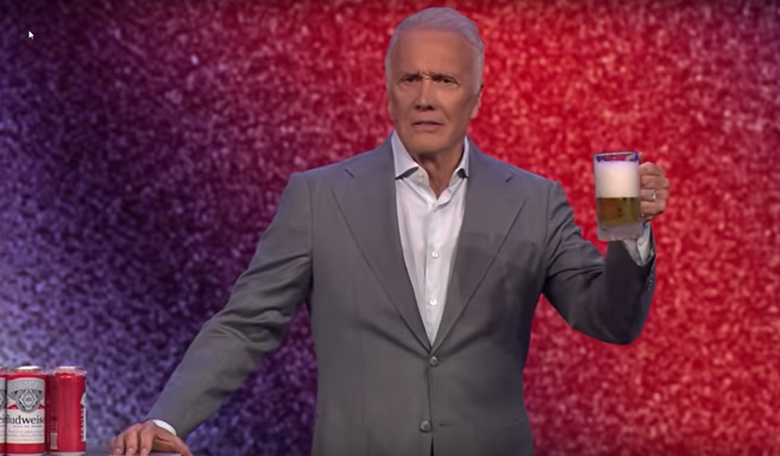
(Screenshot: Pastor Ed Young Jr. uses a glass mug of beer as a prop during a March sermon at Fellowship Church.)

Edwin Barry Young (a/k/a “Ed Young Jr.”) has a Midas Touch with his own personal property but apparently the opposite ‘tainted touch’ when it comes to church mergers.

A recent Houston lawsuit  filed by the Jeremiah Counsel Corporation against Second Baptist Houston’s current leadership, acknowledges the church operates like a family business by describing the leadership as the ‘Young Group’ and expresses serious concerns about a drastic change in church government.  It also describes a worrisome relationship between Young Group family members and the oldest brother of Pastor Ben Young—Ed Young, Jr.

Jeremiah Counsel consists of members and past members of Second Baptist Houston and if history is any indication, these members have good reason to be worried about the fate of their church.

Ed Young Jr.’s long series of mansions and lavish, or “Midas’ touch” lifestyle is well documented.  Perhaps it is Ed Young Jr.’s flamboyant style that eventually turns people off; but whatever the reason, at least five churches that were merged with Fellowship Church have collapsed and no longer exist.

Continue reading “Ed Young’s Toxic Church Business Practices and Mergers Infect Second Baptist Houston and Other Churches”

A Story of Power, Deceit, and Betrayal at Second Baptist Church: Members File Court Petition, Try to Save Church’s Legacy

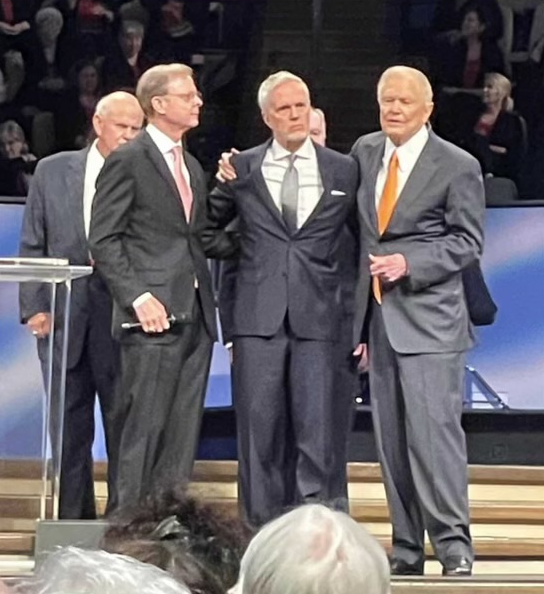
Photo—Facebook: On May 26th 2024 Ed Young (right) announces his son,

Ben Young as the next senior pastor of Second Baptist Church in Houston, Texas 

On Monday, April 15th, 2025, Jeremiah Counsel Corporation (also “Jeremiah” in this article), a non profit formed by a group of concerned members and past members of Second Baptist Church, filed an unusual court petition in Judge Latosha Lewis Paynes’s District Court 55 against the current leadership of Second Baptist Church Houston requesting church governance reforms and restoration of members’ voting rights taken away in secret.

Defendents named in the 123 page petition are Ben Young, Homer Edwin Young, Lee Maxcy, Dennis Brewer Jr., and the Second Baptist Church Corporation, collectively called the “Young Group” throughout the filing.

Yesterday, Jeremiah Counsel Corporation issued a press release and an open letter to Second Baptist’s “90,000 +” members at large from its new website.

What Happened?  A Radical Change in church governance…

At a sparsely attended May 31, 2023 church business meeting, members in attendance either “unknowingly or unwittingly” rubber-stamped the church’s new regulations (its bylaws) without having the opportunity to inspect or read what they were being asked to approve, according to two letters signed by dozens of concerned members and sent directly to Pastor Ben Young months before the filing of this petition.

Section (H) of Jeremiah’s lawsuit gives examples of the “deliberately inconspicuous, legally insufficient, and intentionally vague” purported notices advising recipients of the May 31 membership meeting.  According to the petition, “These statements were part of an intentional plan to alert as few members as possible to the other purpose for this church meeting and to mislead those who did see the notices.”

Section (M) of the petition states, “only about 200 of Second Baptist’s 94,000 members attended on May 31” and that those at the meeting represented less than “one quarter of one percentof Second Baptist’s members.

What does Plaintiff Jeremiah Counsel Corporation want?

 Typical lawsuits request pecuniary relief, often in the millions.  However, apart from legal fees, Jeremiah’s petition doesn’t ask for monetary damages to its members but rather requests a return to the Church’s 2005 bylaws and does request money damages for Second Baptist Church from the Young Group and injunctive relief to cease and desist all conduct or actions stemming from the May 31 bylaws “updates”.

Section (I) of the lawsuit details how Second Baptist trustees, who had met for church business only a few weeks prior to the meeting, were completely unaware of the severity of the bylaw’s changes, before, during, and even after the scantly attended May 31 meeting—changes that eliminated and replaced their own positions.

According to the lawsuit, the Young Group permanently abolished: “(1) church members’ rights to vote and elect, e.g., Second Baptists Pastor and officers, to the governing body of the church, (2) church members’ rights to inspect Second Baptist’s books, financial records, and governing documents, and to provide input on its financial direction and obligations, and (3) church members’ rights to provide input on church policies.” (wording bolded in the lawsuit, p. 15)

Continue reading “A Story of Power, Deceit, and Betrayal at Second Baptist Church: Members File Court Petition, Try to Save Church’s Legacy”

Church and Ministry Governance and Leadership

Most Christians don’t give it much thought and trust their leaders.  We tend to look to a pastor, priest, or whomever is in charge as the expert(s).  But members and donors have a responsibility to make sure their tithes and gifts are doing more than simply enriching the person or persons at the top.

Givers should, at a bare minimum, seek answers to: 1) Who governs the organization or church—a single individual with little or no accountability or an independent group of individuals such as a board of directors? 2) Where does the money go? Do they file a public form 990 or publish an audited financial statement?

Trinity Foundation has encountered all types of organizational and church governance (read our Governance Project) and while there is probably no “best” form, there are certain things members should look for and others to be wary of.  We’ve seen terrible examples over and over and can best describe the better leadership forms by what they are not.

Decades ago, we discovered televangelists and pastors had begun eliminating church member oversight and personal accountability.  We found that all decision-making power in a board of directors often consists of hand-picked family, friends, or employees.  We discovered that more and more pastors are consolidating power in their organizations and eliminating church member oversight.

The “smell factor”

If a certain pastor or ministry leader is living lavishly (any one of the following—a corporate jet, a mansion, multiple houses, a luxury car, etc.) this lifestyle begs the question—is this person more concerned about themselves or the gospel of Christ and others? Are they a lover of money?   When the smell is “off”, so to speak, donors need to start asking questions.

The pattern set forth in the gospels is one of servanthood and humility, not of “lording it over” congregations or members.  If it begins to smell foul, both the person and the organization deserve a closer look and some good-old-fashioned research.

Questions Donors Should Ask:

Does the leader regularly preach, teach, or advocate the life and teachings of Christ, including the cross?  The Apostle Paul said, “For I determined not to know anything among you, save Jesus Christ, and him crucified.”

Does the pastor or leader constantly refer to themselves, other than confession?

Is the church or ministry transparent?

How are your donations being used?  We can’t emphasize enough that churches and organizations should publish or make available financial documents illustrating how donor money is spent.  They should file the IRS form 990 or publish an audited financial statement on their website.

Do excess church funds simply accumulate to make the church wealthier, or do they help the poor, needy, distressed, and disadvantaged in the community?

Does the pastor or ministry leader’s family control how and where the money is spent?

Is there a group of people that hold the leader responsible, such as an independent board of elders, deacons, or board members?

Leadership Standards

Does the leader have integrity as defined by the Apostle Paul? (1st Timothy, chapter 2) A bishop then must be blameless, the husband of one wife, vigilant, sober, of good behavior, given to hospitality, apt at teaching; not given to wine, not violent, not greedy for filthy lucre, but patient, not a brawler, not covetous; one who rules well his own house, having his children in subjection with all dignity.


“I’m proud of having to bail my son Nathan out of jail for going to church”

Photos: 1) Nathan at Fellowship Church, 2)  Nathan with Executive Producer Chris Ayoub at Tarrant County Courthouse hearing

Religion Business documentary producer Nathan Apffel flew in from out of state and presented himself in a Tarrant County courtroom this morning, November 18, 2024, to face a criminal trespass charge.  The crime is considered a Class B misdemeanor and can be penalized with a fine of up to $2,000 or 180 days of jail time.

At the court hearing, Nathan’s dad, Ed Apffel, said, “I’m proud of having to bail my son Nathan out of jail for going to church.  The floodgates have opened for his documentary about the religion business.”

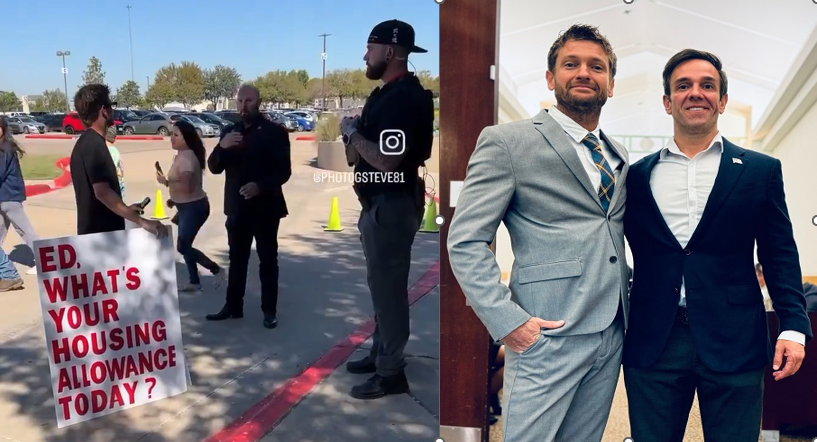
Sunday, October 20th, Apffel was arrested at Fellowship Church in Grapevine Texas while holding up a large sign asking Pastor Ed Young to reveal the amount of his housing allowance.  Young’s security team included a zealous deputy sheriff who roughed up Mr. Apffel and forced him to get his elbow x-rayed and left bruises on his wrists from the handcuffs.

Fellowship Church security called in the Grapevine police and Apffel was charged with trespassing. “I wasn’t expecting so much brute force,” Apffel told Trinity Foundation investigators following his release from jail (initial article here).   During the incident, Nathan’s cameraman Steve Hickey’s camera was confiscated and damaged by security guards and Hickey received a trespass warning.  Apffel mentioned that the Grapevine police department treated him with kindness and respect, unlike the church’s security team.

Apffel’s hearing appearance today was only a first step of good faith to prevent a warrant being issued for his arrest and he will be required to return at least once more as the case against him proceeds.  His next court hearing is scheduled for December 17th.

Documentary Producer Arrested While Attempting to Confront Pastor About Housing Allowance


(Note, this article has been updated, since publication on 10/22/2024)

Documentary Producer Nathan Apffel was arrested and manhandled Sunday October 20th after holding a sign outside Ed Young’s church, asking what his ministerial housing allowance amounts to. Following his arrest, Mr. Apffel said he’ll need to have his right elbow X-rayed and still feels the pain inflicted on his wrists by the handcuffs.

“I wasn’t expecting so much brute force” said Apffel, who has been working several years on a docuseries about the religion business.  “I kept asking the deputy who cuffed me to ease up with the handcuffs, it was like he was trying to inflict pain.”

Apffel spent the night in jail before making bail Monday morning, 10/21/24. Two days before his arrest, he tried unsuccessfully to get an interview with the church’s CEO and lawyer Dennis Brewer Jr.

How do these preachers afford such expensive real estate? One way is through extremely large housing allowances.  Apffel stated in one of his videos that in 2005, Mr. Ed Young received a housing allowance of $240,000.  Young has not disclosed what he is receiving now in 2024.

Publicity hound pastor Ed Young, known for his attention getting stunts, such as holding a press conference in bed with his wife on top of the church office building, now has the kind of publicity he would probably rather avoid.

While Steve Hickey, Nathan’s cameraman, was filming Mr. Apffel, his camera was confiscated and damaged by security guards and he received a trespass warning. Mr. Hickey stated they were confronted by over a dozen security guards. As Apffel was detained, the Grapevine police were called in.

Fellowship Church CEO Dennis Brewer Jr.’s father, Dennis Brewer Sr., represented quite a few well-known pastors and televangelists.

Donors:  We (Trinity Foundation) urge you to find out how the money is spent (including housing allowances) in the ministry or ministries you support. This information may be available on a Form 990 or church financial statement, if the non-profit organization files such statements.