

(Photo: Pixabay/shameersrk)
Technologies and cultural trends developed over the last 100 years have transformed church attendance and ministry giving, allowing religious organizations to collect donations from a global audience as Bible translations redefined tithing.
These changes, which are visible in televangelist broadcasts and numerous church live streams, have resulted in donors frequently supporting religious leaders that are strangers.
Until the 1970s, megachurches were quite rare. Most church members attended a neighborhood congregation. Church attendees and clergy knew each other.
Unfortunately, the private lives of some pastors are in conflict with the Bible they proclaim to preach. For this reason, donors should carefully check out religious organizations and their leaders.
Tithing Changed by Translation
Approximately 4,000 years ago Abram gave the first tithe in recorded history to Melchizedek, the King of Salem. Genesis 14:20 reveals that Abram donated a tenth of the spoils of war to the King.
However, most of the time tithing in the Bible referred to offerings given to provide for the Levites and Priests that served at the Temple.
Leviticus 27:30 NIV says, “A tithe of everything from the land, whether grain from the soil or fruit from the trees, belongs to the LORD; it is holy to the LORD.”
It might surprise many Christians, but for a large part of church history, offering collections were not a weekly occurrence.
Christian History & Biography reports, “Unlike preaching, singing, and prayer, however, the weekly offering did not become a fixture in American worship services until the late 19th century.”
While European nations had state churches financed by taxes, the United States took a different path, adopting the 1st Amendment which prohibited a state church.
In the early 1800s American churches were often funded by pledge campaigns and the renting of pews.
Slowly the practice of weekly offerings grew with pastors embracing 1 Corinthians 16:2. The King James Version says, “Upon the first day of the week let every one of you lay by him in store, as God hath prospered him, that there be no gatherings when I come.”
When the Apostle Paul wrote this letter to the Church in Corinth, many of the Christians were farmers. It is likely that most of their giving was in the form of food.
Newer Bible translations would rewrite the verse to describe the tithe as money.
For example, the New Living Translation says, “On the first day of each week, you should each put aside a portion of the money you have earned. Don’t wait until I get there and then try to collect it all at once.”
Bypassing the Prayer Line
For more than 50 years televangelists have raised money by soliciting donors to call prayer lines, but the newest innovations allow donors to bypass the phone call and donate.
On November 30th attendees of Pastor Ed Young’s Fellowship Church in Grapevine, Texas, were encouraged to financially support the church through three different methods: Check or cash in an envelope, smartphone payment or website donation.
The following screenshot from the Fellowship Church livestream shows how attendees were advised to “tap your seat” with a smartphone.
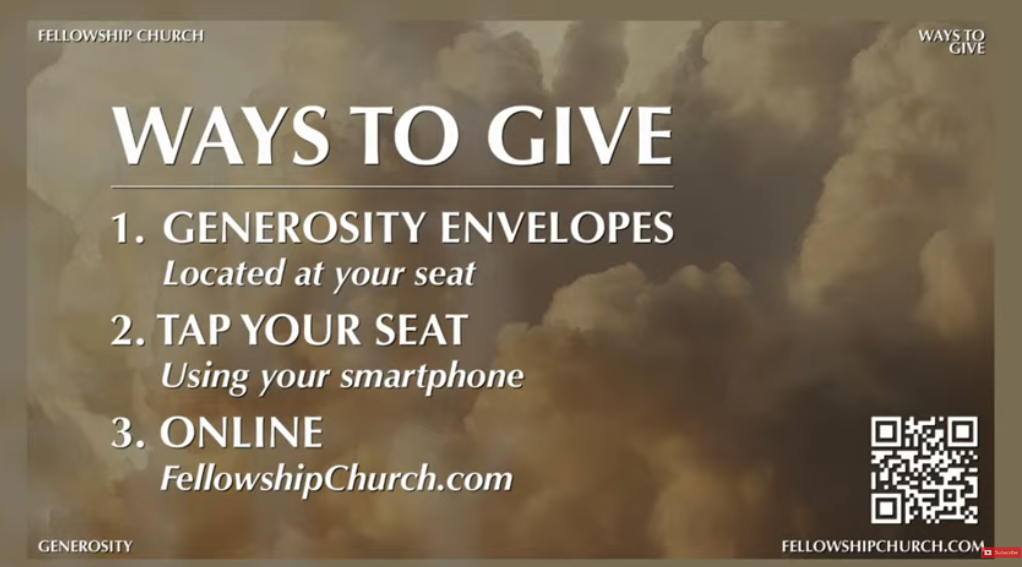
Church chairs equipped with tap tags using Near-field Communication technology (NFC) enable donors to give from their phones. Sometimes the tags also include QR codes for giving.
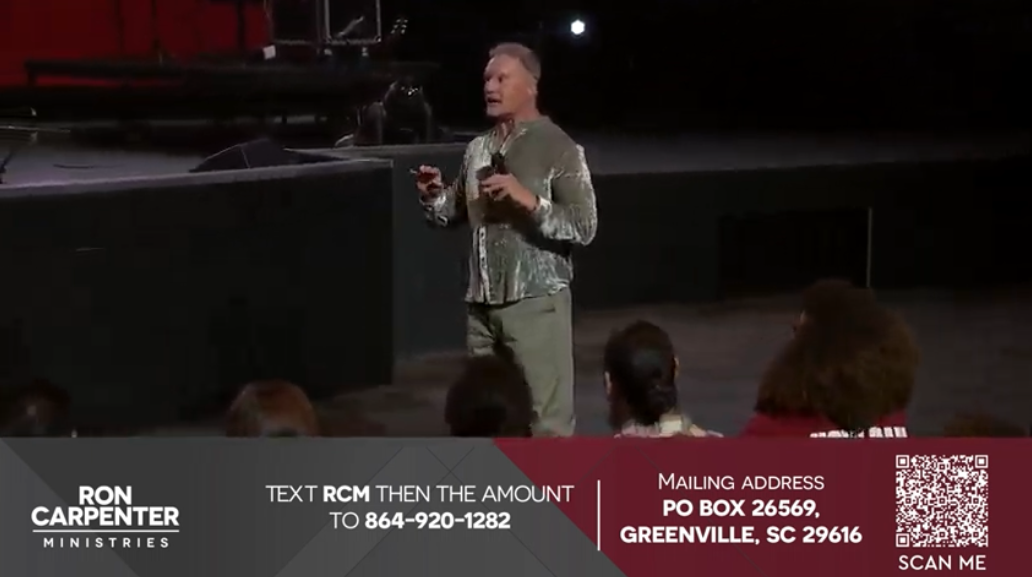
On the same Sunday morning Pastor Ron Carpenter of Redemption Church in San Jose, California and Greenville, South Carolina encouraged online viewers to give by texting his ministry.
Donor Responsibility
Donor, do you know your pastors? If not, get to know them. Become more than a passive attendee. Volunteer in your church. By serving, you will obtain new insights into the moral character of church leadership.
Carefully review the preaching like the Berean believers. The Bible praises the believers that reviewed the scriptures to verify that what the Apostle Paul was preaching was true.
Finally, consider requesting a church, ministry financial statement or Form 990 to see where the money is going. Church members should be allowed to read the bylaws of their own church as well. Transparent religious organizations are more likely to operate with integrity.
If your church is more concerned with collecting money than sharing the Gospel, it is time to overturn the money changers tables.